


Blazed Diffraction Grating Metrology Services
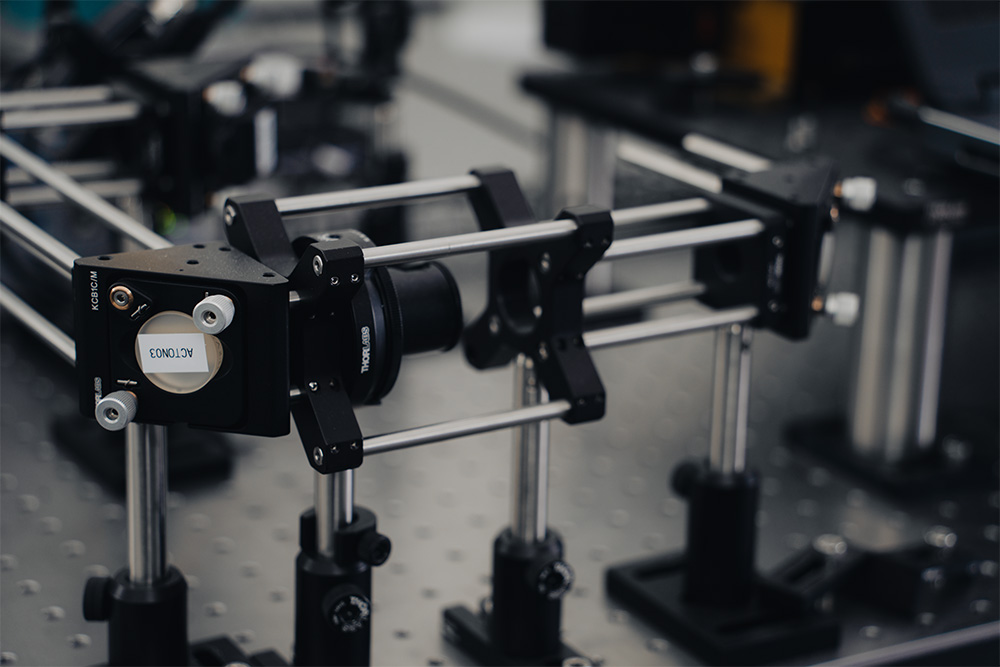
Inprentus provides blazed diffraction grating metrology services for customers who need accurate characterization of grating performance, groove geometry, blaze angle, resolving power, stray light, and optical efficiency. With more than 10 years of experience measuring high-precision diffraction gratings, our team uses advanced optical and nanoscale metrology techniques to evaluate both custom grating masters and replicated optics.
Our metrology capabilities include Fizeau interferometry, atomic force microscopy, FIB/SEM cross-section imaging, two-circle diffractometry, stray light measurement, and 248-nm reflectometry. If your project requires a custom diffraction grating measurement outside these techniques, contact us to discuss your characterization needs.
Fizeau Interferometry for Diffraction Grating Resolving Power
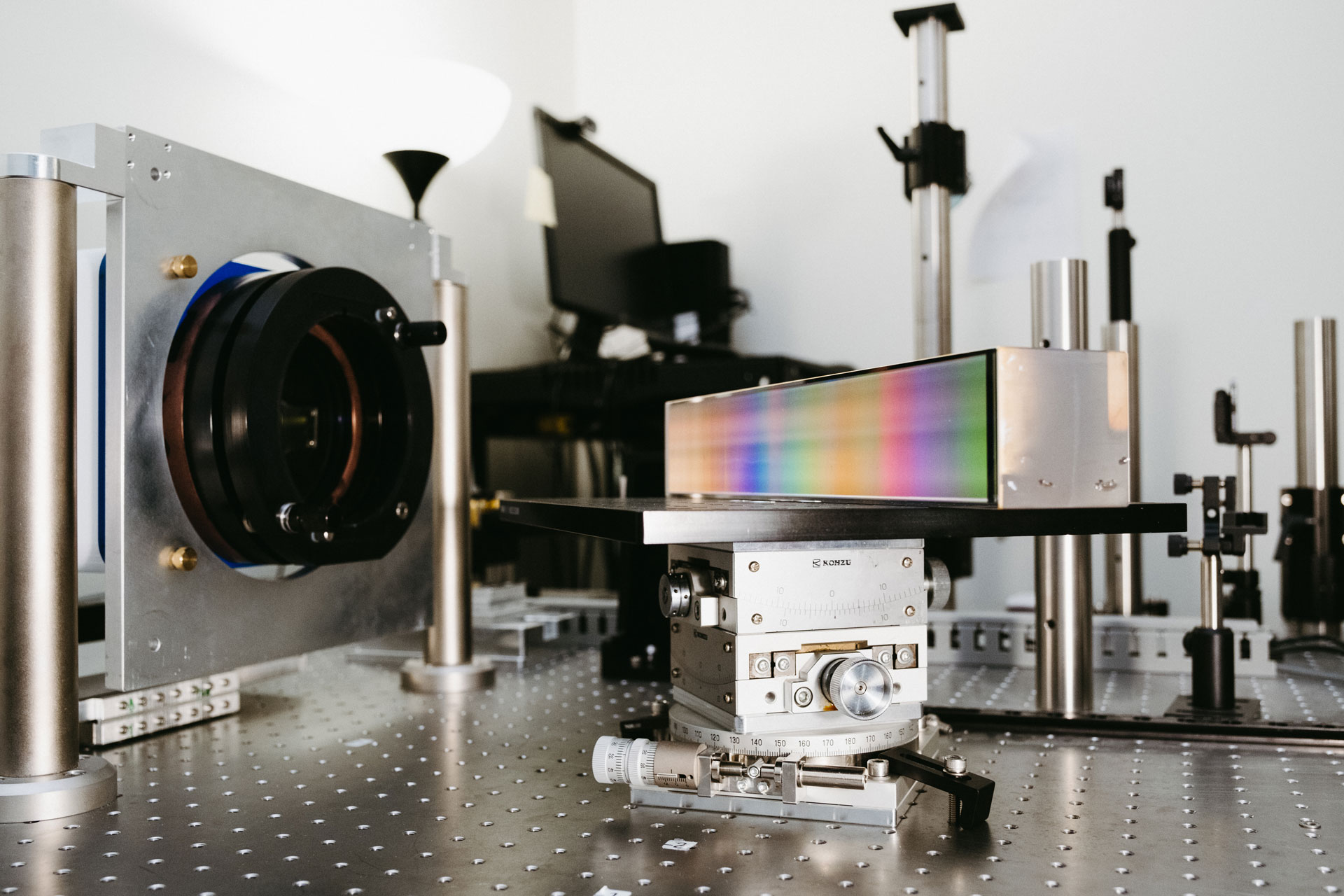
Inprentus uses Fizeau interferometry to measure wavefront displacement across diffraction gratings and calculate intrinsic resolving power. This approach provides a fast, accurate method for evaluating grating figure errors and performance limits, especially for high-resolving blazed diffraction gratings. This technique is optimized for constant line density gratings on planar surfaces, but large radius of curvature or a gentle variable line spacing grating may also be measured without requiring stitching.
AFM Groove Profile Measurement for Blazed Diffraction Gratings
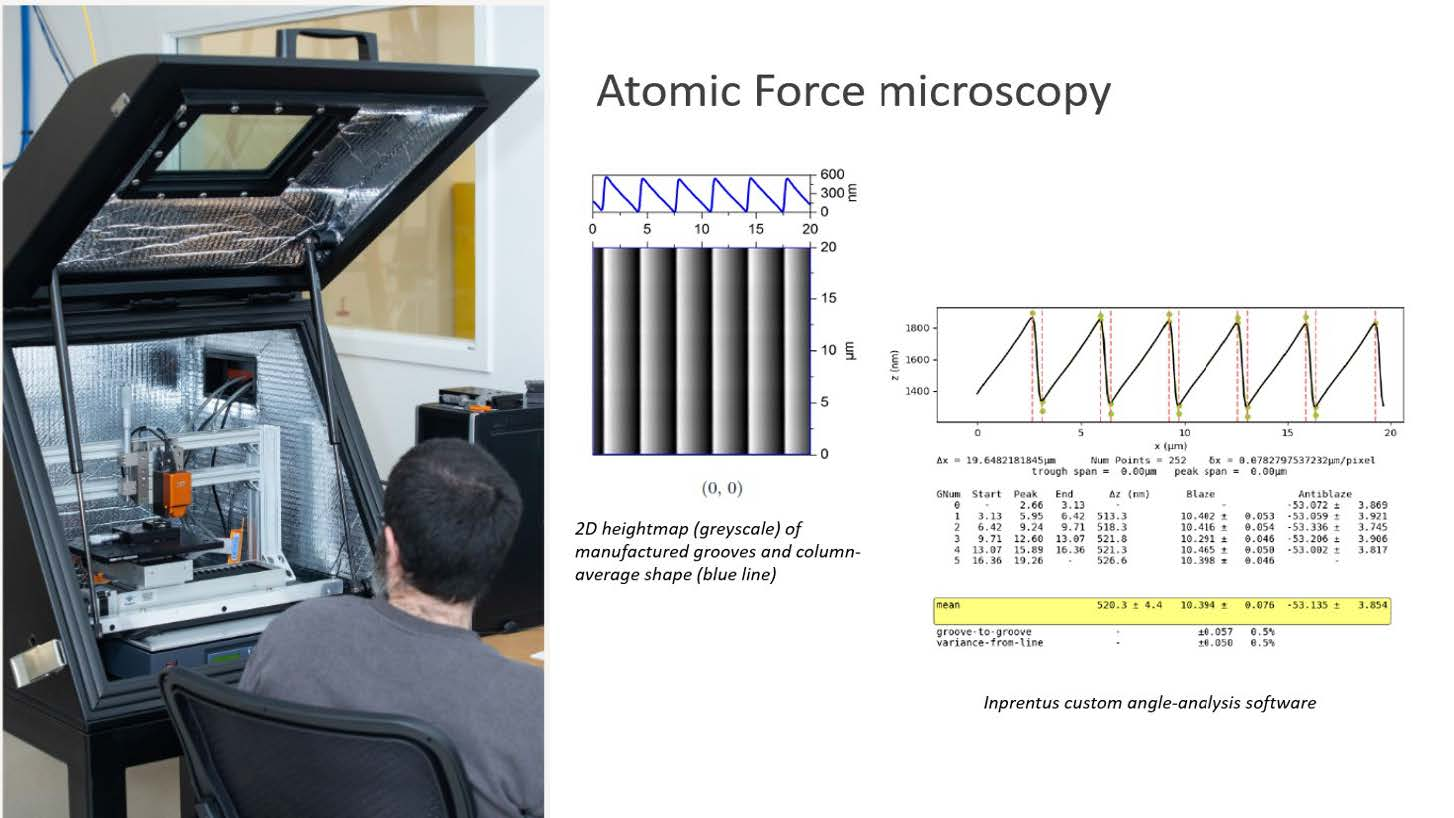
Atomic Force Microscopy (AFM) provides nanoscale details on diffraction grating groove shape, pitch, depth, blaze angles, and surface roughness. Inprentus uses in-house Nanosurf AFMs to image blazed, binary, master, and replicated gratings with high-resolution surface measurements.
Our AFM grating metrology service can measure groove pitches from 150nm to 20µm, groove depths from below 10nm to 4µm, and groove angles from 0.1° to greater than 70°, depending on probe-tip limitations. In addition to raw scan data, Inprentus can process AFM measurements with internal angle-fitting software to provide statistics on groove dimensions and angles.
- Pitch: 150 nm to 20 µm
- Groove depth: < 10 nm to 4 µm
- Angles*: 0.1° to > 70°
In addition to the raw scanning data, Inprentus will process the scans using our internal angle fitting software to provide statistics on the dimensions and angles for all grooves measured.
*Angles measured are limited by the AFM scanning probe tip and typically cannot be relied upon above 70°. Please see our FIB/SEM service for measuring grooves with steeper angles.
FIB/SEM Cross-Section Imaging for Grating Groove Geometry
FIB/SEM imaging allows Inprentus to measure diffraction grating groove shapes that are difficult or impossible to characterize using traditional optical metrology. This technique is especially useful for nanoscale groove pitch, groove depth, vertical sidewalls, steep blazed angles, and undercut.
By combining focused ion beam cross-sectioning with scanning electron microscopy, Inprentus can provide detailed groove height profiles for blazed, binary, and undercut diffraction gratings. Raw image data and processed height-profile measurements can be used to evaluate groove dimensions, angles, and manufacturing.
Equipment Description: Helios NanoLab 600i (SEM/FIB DualBeam)
- SEM Resolution: 0.9 nm at 15 kV
- FIB (Ga+) Resolution 4.0 nm at 1.1 pA, 30 kV
- Maximum ion beam current 65 nA (rapid ion milling)
- Platinum deposition GIS (protective layer)
- Maximum substrate size 150 mm


Two-Circle Diffractometry for Optical Blaze Angle Measurement
A blazed diffraction grating is designed to concentrate diffracted light into specific angular regions. Inprentus uses a custom two-circle diffractometer to measure the angular distribution of diffracted light and evaluate blazed fidelity across the full grating.
The system uses a polarized 543-nm HE-NE laser and can independently select incoming and outgoing wave vectors. By comparing measured angular distributions with rigorous optical calculations, Inprentus can determine blaze and anti-blaze angle performance at the grating level rather than relying on only localized AFM or FIB/SEM measurements.
Stray Light Measurement for Blazed Diffraction Gratings
Random groove-position errors and groove-shape variations can produce diffuse background scattering around the primary diffracted beam. Inprentus configures its two-circle diffractometer to measure normalized stray light and evaluate scattering behavior across different wave vectors.
This stray light metrology service is available in angle-integrated and angle-resolved modes, helping customers understand how manufacturing error, groove shape, and grating structure affect optical performance.
This measurement is available in two modes:
- Angle integrated mode
- Angle resolved mode


248-nm Reflectometry for Diffraction Grating Efficiency Measurement
Inprentus uses a 248.6-nm reflectometer to measure diffraction grating efficiency for lithography systems, DUV spectrometers, and other ultraviolet optical applications. The system uses a NeCu pulsed laser and can measure both S and P polarization.
Using a calibrated mirror as a reference, Inprentus provides absolute efficiency measurements for customer gratings. In addition to measured efficiency data, our simulation team can compare results against ideal grating models or sampled reaction groove-shape simulations to help customers understand how groove geometry affects optical efficiency.