


Space & NASA Gratings
Curved Blazed Diffraction Gratings for Space Science
Inprentus manufactures custom curved, blazed diffraction gratings for space-based spectrometers and astronomical instruments. Founded in 2012 by University of Illinois Professor Peter Abbamonte, we use proprietary digital ruling technology with dynamic contact-mode lithography. With 100+ gratings delivered to synchrotrons, FELs, semiconductor, and space research facilities worldwide, Inprentus is a trusted American partner for next-generation diffraction gratings.
The Challenge for Space Instruments
Space-based spectrometers face strict size, weight, and performance constraints and must be compatible with ultra-high-vacuum conditions. Flat gratings require additional optical elements that add mass, complexity, and alignment risk, while dim stellar and solar targets demand maximum light throughput with no room for efficiency losses
Our Solution: Curved & Blazed Gratings
Inprentus has developed a breakthrough capability to manufacture blazed diffraction gratings on curved surfaces — a 2-in-1 optical element combining mirror-like focusing with the dispersive function of a grating.
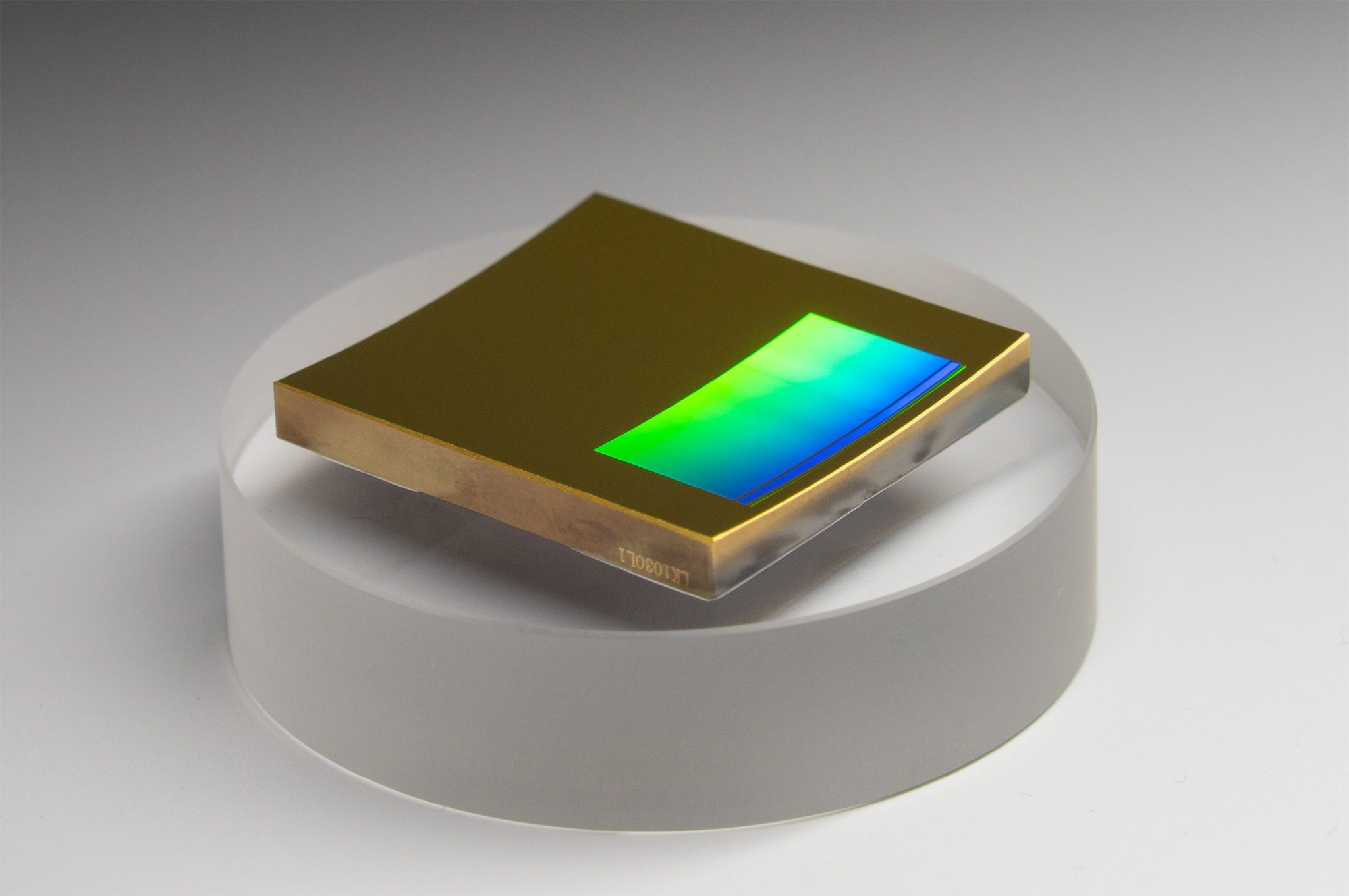
Why Curved Blazed Gratings
- Compact Design: Curved gratings eliminate separate focusing optics for more compact instruments
- High throughput: Blazed groove profiles concentrate diffracted light into the desired order, ideal for photon-starved targets like dim stars
- Nanometer precision: Grooves placed with <100nm precision over hundreds of thousands of lines for diffraction-limited resolving power
- Unique Capability: The only known manufacturer of curved blazed gratings with variable line spacing, high line density, and <1nm rms roughness that are UHV-compatible
Government-Backed Innovation
SBIR/STTR Heritage
Inprentus’ early technology development was supported by the U.S. SBIR program, including NSF Phase I and Phase II awards for a novel method of manufacturing ultra-precise diffraction gratings for X-ray analysis and imaging. This SBIR history reflects federal validation of Inprentus’ core manufacturing approach and its continued path toward commercialization.
Year of First Award 2013
Phase I Awards 1
Phase II Awards 1
Conversion Rate 100%
Phase I Dollars $149,435
Phase II Dollars $732,121
Total Awarded $881,556
Phase III / Commercialization Heritage: Inprentus has continued advancing SBIR-supported grating manufacturing technology into commercial and government applications.
View Official Inprentus SBIR Portfolio →Source: U.S. SBIR/STTR Company Portfolio
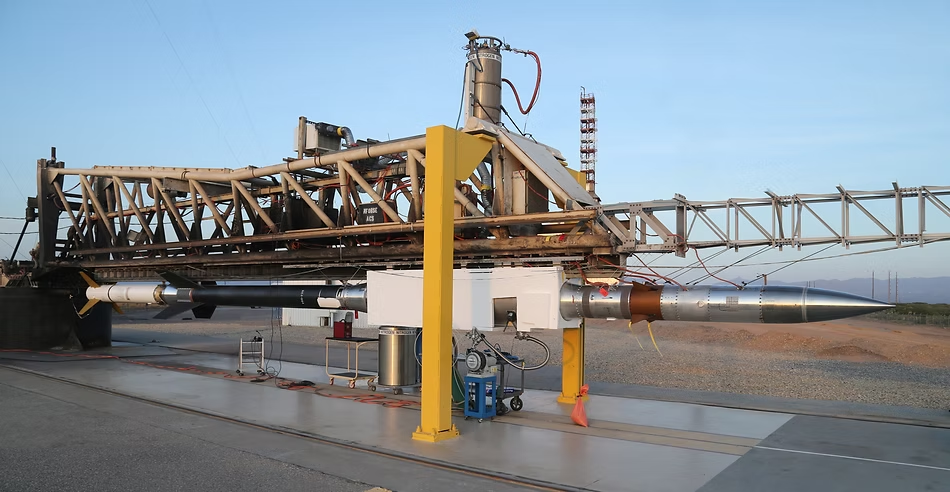
The ESIS instrument on the rail preparing for launch. Image credit: NSROC and Catharine Bunn.
Why Inprentus for NASA/Space Research
- NASA heritage: Phase III contract for ESIS-II; experienced with space-grade optics
- Efficiency guarantee: Minimum 75%, typically 90% of theoretical ideal, validated by at-wavelength measurements
- Fast turnaround: Industry-leading delivery times with rigorous QA and FAT-reporting
- UHV compatible: ISO 6 cleanroom; double-bagged, shock-monitored package for flight hardware
- Design & Manufacturing expertise: Agile team with 10+ years in custom diffraction gratings
NASA Mission: ESIS-II
Inprentus is delivering optics for an upcoming NASA space mission. ESIS — the EUV Snapshot Imaging Spectrograph — is a NASA sounding-rocket instrument that captures the same field of view across multiple channels to map solar plasma velocity in a single exposure. It first flew from White Sands Missile Range in 2019; the follow-on ESIS-II refits the instrument to target a solar active region.
In 2025, Inprentus was awarded a NASA SBIR Phase III contract to manufacture 12 spherical diffraction gratings for ESIS-II. These curved, blazed gratings will enable simultaneous 6-channel EUV imaging of the Sun, performing both the focusing and dispersive functions in a single optical element. The mission is scheduled to launch in 2027.
A Phase III award is reserved for technology matured beyond R&D into delivery for a real mission — reflecting both the readiness of our curved-grating technology and NASA's confidence in our flight hardware. Built to space-grade standards, our ESIS-II gratings are ultra-high-vacuum compatible, finished in an ISO 6 cleanroom, and delivered with full QA and First Article Test (FAT) reporting.
Key Technical Capabilities
- Wavelength range: Soft X-ray, UV, Visible, IR
- Groove Density: 50-6000 lines/mm
- Surface roughness: <1nm rms
- Stray light: <0.2% (over 2π steradian)
- Resolving power: diffraction-limited; >100,000
- Substrate size: up to 500 mm x 200mm
- Radius of curvature: down to ~ 100mm & freeform
- Pitch uniformity: <20 pm